 Click To Email
  (623) 323-9044
  Opening hours: Mon - Friday, 6:00am to 7:00pm






Your Pool Filter Is the Unsung Hero of Clean Water
If your pool pump is the heart of your circulation system, the filter is the kidneys. Every drop of water in your pool passes through the filter multiple times a day, trapping dirt, debris, oils, and microscopic particles that chemicals alone can't handle. When your filter is working properly, you barely think about it. When it's not, you notice fast — cloudy water, algae blooms, and a pump that's working overtime for mediocre results.
In Arizona, pool filters deal with conditions that would make a pool tech in Oregon weep. Between the relentless dust, calcium-heavy water, scorching temperatures, and year-round pool use, your filter works harder here than almost anywhere else in the country. Understanding how to maintain it properly isn't just about keeping water clear — it's about protecting a piece of equipment that costs $500 to $2,000+ to replace.
The Three Types of Pool Filters (And Which One You Probably Have)
Cartridge Filters
Cartridge filters are by far the most common in Arizona residential pools. They use pleated polyester fabric elements — usually two or four cartridges — to trap particles down to about 10-15 microns. They're popular because they're relatively low-maintenance, don't require backwashing (which wastes water — a big deal in the desert), and provide good filtration quality.
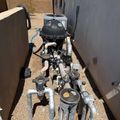
What they look like: A large tank (usually tan or gray) with a clamp band or bolts holding the lid on. Inside, you'll find cylindrical pleated cartridges that look like oversized air filters.
DE (Diatomaceous Earth) Filters
DE filters provide the finest filtration available — down to about 3-5 microns. They use grids coated with diatomaceous earth powder, which is actually fossilized remains of tiny aquatic organisms. DE filters produce the clearest water but require more involved maintenance, including adding fresh DE powder after each backwash.
Sand Filters
Sand filters are the oldest and simplest design. Water flows through a bed of specially graded sand that traps particles down to about 20-40 microns. They're cleaned by backwashing — reversing water flow to flush out trapped debris. They're less common in newer Arizona installations but still found on plenty of older pools.
Arizona-Specific Challenges Your Filter Faces
Dust and Debris Load
Phoenix consistently ranks among the dustiest cities in the United States. Between haboobs during monsoon season, regular wind events, and the fine desert dust that settles on everything, your filter processes an enormous amount of particulate matter. A pool in Scottsdale might accumulate in one week what a pool in Portland deals with in a month.
This means your filter clogs faster, pressure rises sooner, and cleaning intervals need to be shorter than what the manufacturer's generic recommendations suggest.
Calcium and Hard Water
Maricopa County water hardness typically runs between 250-400+ ppm (parts per million). For context, anything above 200 ppm is considered "hard." This calcium doesn't just cause scale on your tile line — it deposits inside your filter, embedding itself in cartridge fabric, clogging DE grids, and cementing sand particles together.
Over time, calcium buildup reduces your filter's effective surface area, meaning it can trap less debris before pressure spikes. This is the number one reason Arizona pool filters have shorter lifespans than the same filters in states with softer water.
Year-Round Use and Heat
Unlike pools in northern states that get winterized for four to six months, Arizona pools run year-round. That means your filter never gets an off-season. Twelve months of continuous use accelerates wear on cartridge fabric, DE grids, and sand media.
The extreme heat also affects filter housings and o-rings. UV exposure degrades plastic components, and thermal cycling (cool nights, blazing days) stresses seals and gaskets over time.
How to Maintain a Cartridge Filter
Regular Cleaning (Every 4-8 Weeks in Arizona)
- Turn off the pump. Open the air relief valve on top of the filter to release pressure.
- Remove the clamp band or bolts and carefully lift the lid. Some filters are heavy — don't rush this.
- Pull out the cartridges. Note their orientation so you put them back correctly.
- Hose them down with a standard garden hose and a nozzle that produces a focused stream (not a pressure washer — that destroys the pleats). Work from top to bottom, getting into every pleat. Rotate the cartridge as you go.
- Inspect for damage. Look for tears, crushed or flattened pleats, cracked end caps, or loose bands. Any cartridge with visible damage should be replaced.
- Reassemble in reverse order. Make sure the o-ring is clean and lubricated with a silicone-based lube (never petroleum-based). Hand-tighten the clamp band evenly.
- Turn the pump back on and open the air relief valve until a steady stream of water comes out, then close it. Note the clean starting pressure — this is your baseline.
Deep Chemical Cleaning (Every 3-6 Months)
Hosing alone won't remove oils, sunscreen, and calcium that embed deep in the fabric. Every few months, soak your cartridges overnight in a filter cleaning solution. There are two approaches:
- For oils and organics: Use a dedicated filter degreaser (like a TSP substitute) — about 1 cup per 5 gallons of water.
- For calcium deposits: Use a muriatic acid solution — roughly 1 part acid to 20 parts water. Always add acid to water, never water to acid. Soak for a few hours, not overnight with acid.
Some pool owners rotate between the two. In Arizona, we recommend the acid wash at least twice a year because calcium buildup is your cartridge's worst enemy.
Pro tip: Having a second set of cartridges lets you swap in clean ones immediately and soak the dirty set at your leisure. This is especially useful during heavy-use summer months when you don't want the pool down for 24 hours.
When to Replace Cartridges
Even with perfect maintenance, cartridge elements wear out. In Arizona, expect to replace them every 1 to 3 years depending on pool size, bather load, and how disciplined you are about cleaning. Signs it's time:
- Pressure rises to 8-10 PSI above clean baseline even after thorough washing
- Cartridge fabric is thinning, fraying, or has a permanent brown/gray discoloration that won't wash out
- End caps are cracked or warped
- Pleats are permanently flattened or collapsed
- You're cleaning every two weeks and pressure still climbs fast
Don't try to squeeze an extra season out of spent cartridges. A failing filter means your pump works harder (higher electric bills), your water quality drops (more chemical use), and you risk burning out a pump motor that costs far more than new cartridges.
How to Maintain DE and Sand Filters
DE Filters
- Backwash when pressure rises 8-10 PSI above clean baseline.
- Add fresh DE after every backwash through the skimmer. The amount depends on your filter size — check the label on the filter tank.
- Tear down and clean grids at least once a year (twice in Arizona is better). This means opening the filter, pulling out the grid assembly, hosing each grid individually, and inspecting for tears in the fabric.
- Replace torn grids immediately. DE powder passing through torn fabric ends up back in your pool as a white powder on the bottom.
Sand Filters
- Backwash when pressure rises 8-10 PSI above clean baseline.
- Replace sand every 5-7 years. Over time, sand grains become smooth and rounded, losing their ability to trap particles. In Arizona, calcium can cement sand into clumps even sooner.
- Consider upgrading sand media to ZeoSand or FilterGlass, which filter finer particles and last longer than standard #20 silica sand.
Pressure Gauge: Your Filter's Dashboard
The pressure gauge on top of your filter is the single most important diagnostic tool you have. Here's how to read it:
- Normal clean pressure: Note this right after a thorough cleaning. For most residential systems, this is somewhere between 8 and 15 PSI.
- Time to clean: When pressure rises 8-10 PSI above your clean baseline. If your clean pressure is 10 PSI, clean at 18-20 PSI.
- Abnormally low pressure: Usually indicates a flow restriction before the filter — clogged skimmer basket, full pump strainer, or a suction-side air leak.
- Gauge reads zero or doesn't move: The gauge is probably broken. Replace it — they're under $15 and screw right in.
Write your clean baseline pressure on a piece of tape and stick it on the filter tank. This way anyone checking the system (including your pool service tech) knows exactly when it's due for cleaning.
Common Filter Mistakes We See in Arizona
1. Pressure-washing cartridges. A pressure washer feels efficient but destroys the filter media. The high-pressure stream opens up the pores in the fabric, permanently reducing filtration quality. Use a garden hose with a standard nozzle.
2. Running the pump with a dirty filter. Some homeowners see high pressure and think "the pump is working hard, that's good." It's not. High pressure means restricted flow, which means poor circulation, hot pump motor, higher electricity use, and inadequate filtration. It's like trying to breathe through a clogged mask.
3. Ignoring the o-ring. The large o-ring that seals the filter lid is a common leak point. Keep it clean, lubricated, and replace it if it's flat, cracked, or no longer round. A leaking filter lid introduces air into the system and wastes water.
4. Using the wrong filter size. If your pool was built with an undersized filter (unfortunately common in budget builds), no amount of maintenance will keep up. A filter should be sized to handle at least the full flow rate of your pump. If you're constantly fighting dirty water despite good chemical balance, an undersized filter might be the culprit.
5. Never doing chemical soaks. Hosing alone removes maybe 70% of what's trapped in a cartridge. The remaining oils, lotions, and calcium slowly accumulate, reducing cartridge life dramatically. Chemical soaks are not optional in Arizona — they're essential.
When to Call a Professional
Filter maintenance is one of the more accessible DIY pool tasks, but there are situations where calling a pro makes sense:
- You're not sure what type of filter you have or how to open it safely.
- Pressure is abnormally high even after cleaning — this could indicate a plumbing issue, damaged internal components, or an incorrectly sized system.
- You see DE powder or sand returning to the pool — internal components are damaged.
- The filter housing is cracked or leaking from the tank itself (not the lid).
- You want a filter system evaluation to make sure your equipment is properly matched to your pool size.
At McCool's Pools, filter maintenance is part of every regular service visit. We track your filter pressure, perform chemical soaks on a rotating schedule, and let you know well in advance when cartridges or other components are approaching end of life — so you're never surprised by a sudden failure in the middle of July when you need your pool most.
The Bottom Line
Your pool filter is a workhorse that quietly keeps your water swimmable every single day. In Arizona's harsh conditions, it needs more attention than the manufacturer's generic guidelines suggest. Clean it regularly, soak it chemically every few months, replace worn cartridges before they fail completely, and pay attention to that pressure gauge.
A well-maintained filter means clearer water, lower chemical costs, a happier pump motor, and a pool that's always ready when the Phoenix heat hits triple digits.
Need help with your pool filter or any other pool maintenance issue? Contact McCool's Pools for a free consultation. We serve the entire Phoenix metropolitan area with professional, reliable pool care.

 (623) 323-9044
