 Click To Email
  (623) 323-9044
  Opening hours: Mon - Friday, 6:00am to 7:00pm



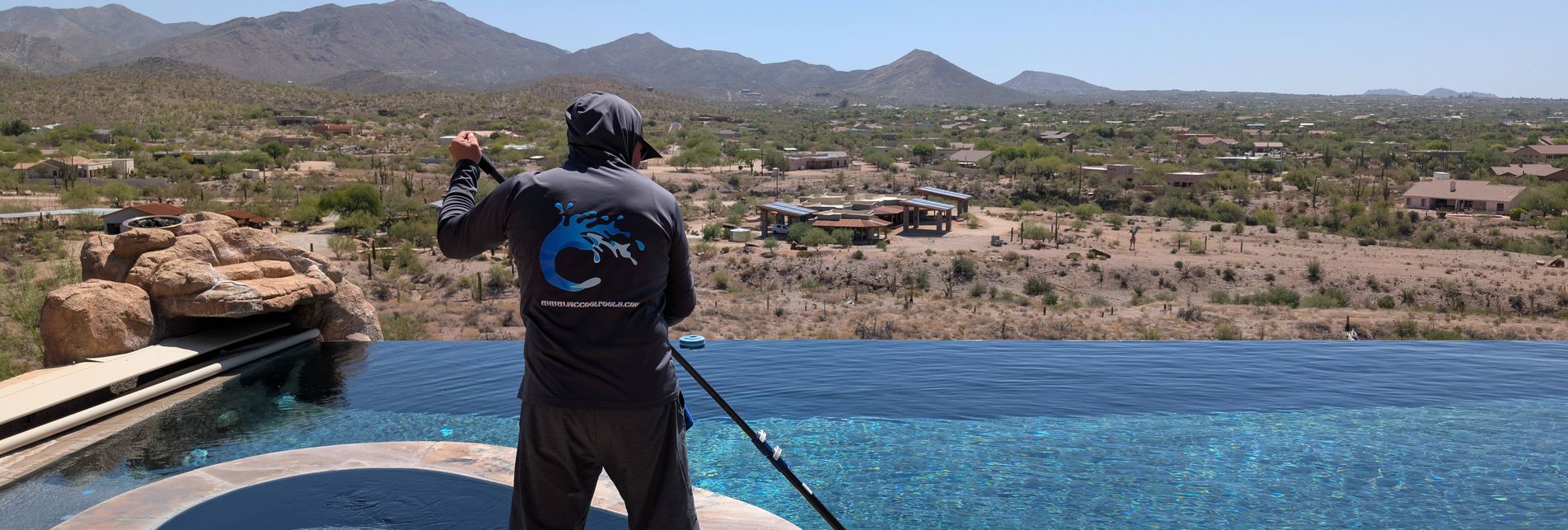


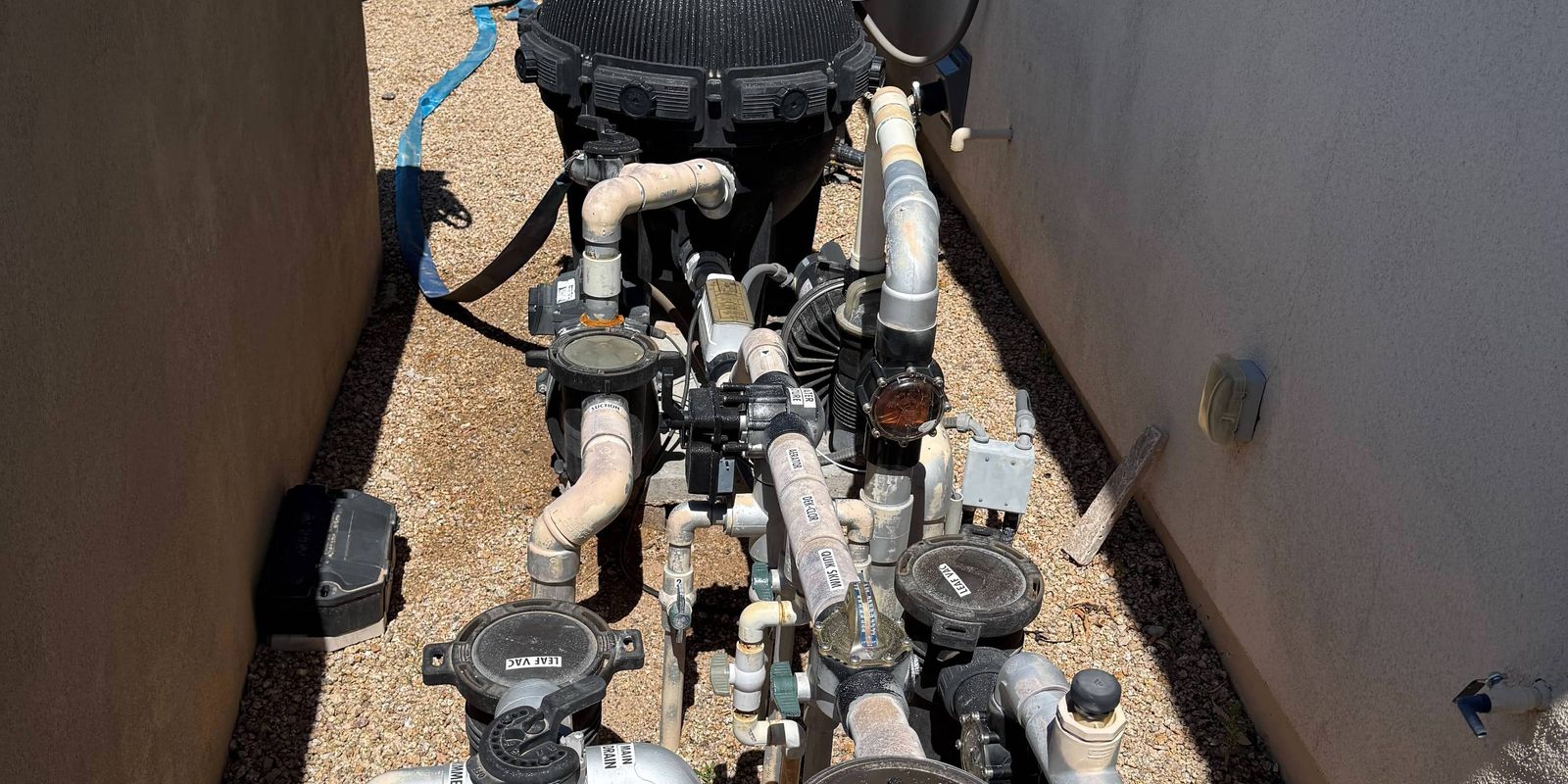

Your Pool Pump Is Probably Your Most Expensive Appliance
If you're an Arizona pool owner staring at a summer electric bill north of $300, there's a good chance your pool pump is the single biggest contributor. In the Phoenix metro area, pool pumps can account for 30-50% of a household's total electricity usage during peak summer months—sometimes more than your air conditioning on a per-hour basis.
The good news? Pool pump energy costs are one of the most fixable problems in home ownership. With the right equipment, scheduling, and maintenance habits, most Arizona pool owners can cut their pump-related electricity costs by 50-80% without any sacrifice in water quality. At McCool's Pools, we've helped hundreds of homeowners make these changes, and the results are consistently dramatic.
Here's everything you need to know about running your pool efficiently in the Arizona heat.
Understanding Why Arizona Pools Use So Much Energy
Before we talk solutions, it helps to understand why Arizona pools are energy hogs compared to pools in other states.
Longer run times are necessary. Arizona's extreme heat accelerates chemical breakdown (especially chlorine), algae growth, and bacterial activity. A pool in Michigan might get away with 6 hours of pump runtime per day in summer. In Phoenix during July, you often need 8-12 hours of circulation to maintain safe, clear water. More runtime means more electricity.
Single-speed pumps are still everywhere. Many Arizona homes were built with single-speed pumps that run at one speed: full blast. These motors typically draw 1,500-2,500 watts—roughly the same as running a space heater. If your pump runs 10 hours a day at that wattage, you're looking at 15-25 kWh per day just for pool circulation. At Arizona's tiered SRP or APS rates, that can easily cost $4-7 per day during peak summer pricing.
Peak rate timing hurts. Arizona utilities use time-of-use pricing. Running your pump during on-peak hours (typically 4-7 PM with SRP, or 4-7 PM with APS) costs 2-3x more per kWh than off-peak. Many homeowners have their pumps on simple timers set years ago—and those timers may be running right through the most expensive hours of the day.
The Single Best Upgrade: Variable-Speed Pumps
If you have a single-speed pump and you're serious about cutting costs, a variable-speed pump upgrade is the most impactful change you can make. It's not even close.
How Variable-Speed Pumps Save Money
A variable-speed pump uses a permanent magnet motor (similar to what's in an electric car) that can run at any speed from about 600 RPM to 3,450 RPM. The physics here are dramatic: pump energy consumption follows the affinity law, which means power usage is proportional to the cube of the speed. In practical terms:
- Running at full speed (3,450 RPM): ~2,000 watts
- Running at half speed (1,725 RPM): ~250 watts
- Running at low speed (1,100 RPM): ~65-100 watts
That's not a typo. Running your pump at low speed uses roughly 3-5% of the electricity that full speed requires. Even accounting for the fact that you need to run at low speed for longer hours to turn over the same volume of water, the net savings are enormous.
Real-World Arizona Savings
Here's what we typically see with our Phoenix-area clients after a variable-speed pump install:
| Scenario | Daily kWh | Monthly Cost (est.) |
|---|---|---|
| Old single-speed, 8 hrs/day | 16-20 kWh | $80-150 |
| Variable-speed, optimized schedule | 3-6 kWh | $15-40 |
Most homeowners see their pump electricity costs drop by $50-100/month, with some saving even more during peak summer. The pump itself typically costs $1,200-1,800 installed, meaning payback periods of 12-24 months are common—and then you're saving money every month for the life of the pump (typically 8-12 years).
Arizona Law Requires Them Now
As of 2021, the Department of Energy requires all new in-ground pool pumps over 1 HP to be variable-speed. If you're replacing a failed pump, you're getting a variable-speed unit regardless. But if your old single-speed pump is still running, the upgrade math almost always makes sense to do proactively rather than waiting for failure.
Optimizing Your Pump Schedule for Arizona
Whether you have a variable-speed pump or a single-speed, your run schedule matters enormously for both your wallet and your water quality.
The Off-Peak Strategy
The simplest change most Arizona pool owners can make is shifting pump runtime to off-peak hours. With SRP's basic time-of-use plan, off-peak rates can be half or less than on-peak rates. Here's a schedule framework that works well for most Arizona pools:
Variable-speed pump (recommended schedule):
- Low speed (1,100-1,200 RPM): Run overnight from 8 PM to 8 AM (12 hours). This provides continuous circulation and filtration during off-peak hours at minimal cost (~1 kWh total).
- Medium speed (2,000-2,400 RPM): Run for 2-3 hours in the morning (6 AM-9 AM) to boost circulation and help distribute chemicals.
- High speed (3,450 RPM): Brief 15-30 minute bursts as needed for cleaning, backwashing, or running water features.
Single-speed pump (best available schedule):
- Run from 5 AM to 11 AM and/or 8 PM to midnight to avoid on-peak hours entirely.
- Never run your single-speed pump between 4-7 PM during summer—this is the most expensive electricity window.
- Aim for 8-10 hours total during summer, 6-8 hours during winter.
Seasonal Adjustments
Arizona's seasons demand different pump schedules:
Summer (May-September): Maximum circulation needed. Chlorine burns off faster, algae grows aggressively, and monsoon storms dump debris. This is when you need 10-12 hours of total runtime (variable-speed makes this affordable).
Winter (November-February): Water temperatures drop below 60°F, dramatically slowing algae and bacterial growth. You can often cut runtime to 4-6 hours per day. Many of our clients save $30-50/month just by reducing winter runtime.
Spring/Fall (March-April, October): Transition periods. Start increasing runtime in March as temps climb; start reducing in October. Watch your water clarity—if it stays clear, you can push runtime down further.
Maintenance Habits That Save Energy
Your pump doesn't operate in isolation. The condition of your entire circulation system affects how hard your pump has to work—and therefore how much electricity it uses.
Clean Your Filter Regularly
A dirty filter creates back-pressure that forces your pump to work harder. In Arizona, where dust and debris are constant, filters clog faster than in other climates. Clean cartridge filters every 4-6 weeks during summer (monthly minimum). Backwash DE and sand filters when pressure rises 8-10 PSI above clean baseline. A clean filter can reduce pump energy consumption by 10-15%.
Keep Your Skimmer and Pump Baskets Clear
Clogged baskets restrict flow. Your pump compensates by drawing more power to maintain circulation. Check baskets weekly—more often during monsoon season when leaves, dirt, and debris accumulate rapidly.
Maintain Proper Water Level
If your water level drops below the skimmer intake, your pump runs dry or draws air, which wastes energy and damages equipment. Arizona's high evaporation rates (pools can lose 1-2 inches per week in summer) mean you need to top off water regularly. Consider an auto-fill device—they're inexpensive and prevent both the energy waste and equipment damage from low water levels.
Check for Suction and Return Leaks
Air leaks on the suction side and water leaks on the return side both reduce circulation efficiency. If you notice air bubbles in your pump basket or your pump seems to be working harder than usual for less flow, have a technician inspect your plumbing connections.
Smart Controllers and Automation
Modern pool automation can optimize pump efficiency beyond what manual timers can achieve.
Smart pump controllers can automatically adjust speed based on what your pool needs at any given time—lower speed for basic circulation, higher speed when the cleaner is running or water features are on.
Utility integration is becoming available in some Arizona markets, where your smart pool controller communicates with SRP or APS to avoid running during peak demand periods, sometimes earning you additional rebates.
Basic timer upgrades are the minimum investment. If you still have an old mechanical timer, replacing it with a digital timer that allows multiple on/off periods costs under $50 and lets you split runtime across multiple off-peak windows.
The Bottom Line: What to Do This Week
If you want to start saving money on your pool pump costs right now, here's the priority list:
Check your timer. Make sure your pump isn't running during peak hours (4-7 PM). This one change can save $20-40/month during summer.
Clean your filter and baskets. Removing built-up debris reduces the load on your pump immediately.
Get a variable-speed pump quote. If you're running a single-speed pump, the upgrade typically pays for itself within 1-2 years. Call us for a free assessment—we'll calculate your specific savings based on your pool size, current equipment, and utility rate plan.
Adjust for the season. If you're running the same pump schedule year-round, you're wasting money for at least 4-5 months of the year. Reduce winter runtime and increase summer runtime as needed.
We're Here to Help
At McCool's Pools, energy efficiency isn't just about saving you money—it's about building a sustainable service relationship where your pool stays clean and clear without unnecessary costs. Whether you need help optimizing your current pump schedule or you're ready for a variable-speed upgrade, give us a call and we'll walk through your options.
Your pool should be a source of relaxation, not stress over your electric bill.



 (623) 323-9044
