 Click To Email
 (623) 323-9044
 Opening hours: Mon - Friday, 6:00am to 7:00pm






Your Pool Needs a Caretaker, Not a Bigger Chemical Dose
Leaving Phoenix for Thanksgiving, traveling for work, or closing up a seasonal home changes who watches your pool—not what the pool needs. Dust still lands in the water. Baskets still collect leaves. Equipment still follows its schedule, even when nobody is home to notice a problem.
The best away-from-home plan has three parts: a stable pool before departure, a written care routine during the trip, and someone local who can respond. A camera and an autofill are useful tools, but neither can test water or clear a blocked basket.
Here is how to prepare without turning the day before your flight into a rushed equipment experiment.
One Week Before: Fix Problems You Already Know About
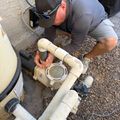
Walk around the pool and equipment pad while the system is operating. Look for persistent drips, unusual pump noise, air in the pump basket, weak returns, and a water level that has changed unexpectedly. Arrange repairs before departure rather than hoping an intermittent problem will wait.
If the filter is approaching its normal service point, schedule that work early enough to observe the system afterward. Compare pressure at the same pump speed and valve configuration; a different operating speed can change the reading without indicating a dirty filter. Follow the filter manufacturer's cleaning guidance rather than a universal pressure number.
Avoid installing a new controller, changing sanitizer systems, or dramatically shortening pump operation immediately before leaving. Give any necessary adjustment several normal operating cycles and water tests to prove it works.
Write Down the Pool’s Normal Baseline
A useful handoff is more specific than “check the pool.” Record:
- Normal water level relative to the skimmer opening.
- Pump schedule and the speed used for each task.
- Typical filter pressure at a named pump speed.
- Current water-test results and the date tested.
- Sanitizer equipment settings and any known operating limitations.
- Service contact, gate access, and who can authorize a repair.
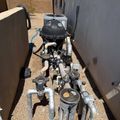
Take clear photos of the equipment pad and controller settings. Label valves only when their functions are confirmed. Your backup person should not have to guess which handle controls the spa or experiment with plumbing to restore circulation.
For a longer absence, keep this information somewhere your pool professional and local contact can both access securely. Do not leave gate codes on a publicly visible checklist.
Set Up Sanitation Around Testing, Not Guesswork
Test and balance the water before leaving, then agree on who will test it while you are gone. The CDC's home-pool water-treatment guidance emphasizes routinely measuring disinfectant and pH; clear water alone does not establish sanitary conditions.
Have your pool professional set a testing and dosing plan appropriate to the water temperature, stabilizer level, equipment, and expected use. An empty backyard may have less swimmer demand, but sunlight and contamination still affect sanitizer consumption. A holiday visit from relatives also changes the plan if they will be swimming.
Do not compensate for an unattended pool by adding an arbitrary pile of tablets or an oversized chemical dose. Products affect water differently, and some add stabilizer or calcium along with chlorine. Never mix chemicals or put tablets into a skimmer as a shortcut. Follow each product's label and the equipment instructions.
A saltwater pool still needs testing. Confirm that its cell is clean enough to operate and check the model's cold-water behavior. Reduced chlorine production in cooler water should be handled through a measured maintenance plan, not an assumption that the generator always produces the same amount.
Make Water Supply Part of the Handoff
Check that the autofill reaches the intended level and actually stops filling. A steady waterline can hide ongoing replacement water, so ask your local contact to notice whether filling seems unusually frequent or continuous.
If someone will shut off the house water supply during your absence, establish whether that also disables the pool's autofill. Do not discover the connection after the water drops below the skimmer. Have the relevant plumbing identified and a replenishment plan agreed upon before the shutoff.
Without an autofill, arrange physical level checks and supervised refilling as needed. An unattended garden hose is not a substitute for a caretaker. The required checking frequency depends on weather, pool exposure, and recent loss patterns—not simply the number of days on your itinerary.
If water loss is already unexplained, investigate before leaving. Our Arizona water-loss guide covers the distinction between evaporation and a possible leak.
Keep Circulation Reliable and Optional Features Modest
Leave a proven filtration and sanitation schedule in place. Nobody swimming does not mean no circulation is needed. Equipment such as heaters, salt cells, and cleaners may also have operating-flow requirements that must remain satisfied.
You may be able to reduce unnecessary decorative water-feature operation or avoid heating water nobody will use. Confirm those changes with your service provider, especially where spa spillover and shared plumbing are involved. Do not disable freeze protection or other protective settings to reduce operating time.
If your controller has a vacation mode, read its specific instructions and test the resulting schedule. The label does not guarantee that every circuit behaves as you expect. Remote access is helpful, but lost Wi-Fi should not prevent a local person from checking the pool.
Give Your Local Contact Clear Action Triggers
Arrange routine visits and an extra check after strong winds, a storm, or a power interruption. For a months-long seasonal absence, keep ongoing professional service and local property checks rather than relying on one departure visit.
Your contact should know to report:
- Water below the normal operating level or filling that will not stop.
- A pump running without establishing normal water flow.
- New leaks, unusual noises, or repeated equipment alarms.
- Heavy debris, cloudy water, or visible algae.
- A damaged gate, failed latch, or displaced cover.
Tell them not to open pressurized equipment, reset a repeatedly tripping breaker, bypass a safety control, or improvise chemical treatments. Give them a service number and an agreed emergency-response path. Someone needs authority to act when you are on a flight, not just permission to send photos.
Departure Day and the First Day Back
Before leaving, empty accessible debris baskets using the equipment's safe shutdown procedure, remove loose toys, secure chemical storage, and confirm the gate closes and latches. Verify that any cover is appropriate for the installation and secured correctly. A floating solar blanket is not a safety barrier.
Send your caretaker the final checklist and confirm the next visit is scheduled. Include any changes to guest access or swimming plans so testing is not based on an empty-pool assumption.
When you return, inspect the water level and equipment, review the service notes, and test the water before swimming. Remove any floating cover completely before entering. If conditions have deteriorated, keep the pool out of use until the problem is resolved.
McCool's Pools can help turn your existing maintenance routine into a practical travel handoff. Share your departure dates, equipment concerns, and local contact before you leave. The goal is straightforward: a pool that stays maintained while you are away, with small problems caught before they become your welcome-home project.




 (623) 323-9044

