 Click To Email
  (623) 323-9044
  Opening hours: Mon - Friday, 6:00am to 7:00pm






Heavy Swim Days Change Everything
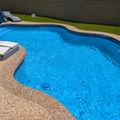
An Arizona pool can look fine in the morning and still be off by dinner.
That is especially true after a weekend with a lot of swimmers, sunscreen, and water that has been baking in the sun all day. The pool may not be green or cloudy yet, but the chemistry is already moving and Arizona heat makes the problem show up faster.
Warm water burns through sanitizer faster. More swimmers add body oils and sunscreen. Dust adds fine debris the filter has to catch. If you wait too long, the water gets dull, the walls get slick, or the chlorine disappears faster than you expect.
The good news is that most heavy-use pool problems are recoverable if you act quickly and in the right order.
Why Arizona Pools Take a Bigger Hit
In a milder climate, a busy pool day is still a busy pool day. In Arizona, the same day comes with extra stress:
- Water temperatures rise quickly in full sun.
- UV exposure burns through chlorine faster.
- Hard water makes scaling more likely when chemistry drifts.
- Dust from the yard or monsoon season adds to the filtration load.
- Evaporation concentrates whatever is already in the water.
That combination means you do not just need to add more chlorine and hope for the best. You need to reset the pool so it can recover.
The First 24 Hours Matter Most
If your pool just went through a heavy-use stretch, start with the basics the same day if possible.
1. Remove the obvious debris
Skim out leaves, bugs, toy bits, and anything floating. Empty the skimmer baskets and pump basket. If the pump basket is packed, circulation suffers immediately.
2. Run the pump longer than normal
After a high-use day, your normal runtime may not be enough. The goal is to move water through the filter long enough to clear out sunscreen residue, fine debris, and the first signs of cloudiness.
If your pool has a variable-speed pump, use a higher circulation setting for part of the recovery period. If it is a single-speed pump, just make sure it runs long enough to keep the water moving and the sanitizer distributed.
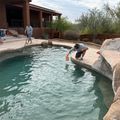
3. Brush the pool
Brush the walls, steps, benches, and corners where water circulation is weaker. Sunscreen film, body oils, and fine dust tend to hang out in the places that already get less flow.
This matters more than people think. Brushing gets residue into suspension so the filter and sanitizer can do their jobs.
Test Before You Guess
Once the pool has had a little circulation, test the water instead of assuming.
The main things to check are:
- Free chlorine
- pH
- Total alkalinity
- Cyanuric acid if the pool tends to burn through chlorine
- Calcium hardness if you have hard-water issues or visible scale
In Arizona, a pool can lose chlorine fast after a weekend even if nothing looks wrong yet. The water is technically in trouble before it looks bad.
What usually changes after heavy use
Free chlorine drops. This is the most common problem. Swimmers consume sanitizer, and warm water plus sunlight makes chlorine work harder.
pH can drift. Sunscreen, bather waste, and chemical additions can move it around. When pH gets too high, chlorine becomes less effective.
The filter loads up. Oils, dust, and fine debris can clog the filter faster than normal.
The water may look dull. That gray, tired-looking water is often the first sign that sanitizer is falling behind.
Do Not Overreact With Chemicals
A lot of pool problems get worse because someone tries to fix everything at once.
If chlorine is low, add what the pool needs and let circulation work. If pH is off, correct pH separately. If the water is cloudy, do not keep dumping random products in and hoping for the best.
The trap is that heavy-use water often needs a few smart corrections, not a chemical avalanche.
In particular:
- Do not add acid and chlorine at the same time.
- Do not add multiple products back-to-back without letting the water circulate.
- Do not assume a strong chlorine smell means the pool is clean. That smell is often chloramines, not “extra chlorine.”
When a Shock Treatment Makes Sense
If the pool took a real beating, a shock treatment may be appropriate. The point is to restore sanitizer strength fast enough to get ahead of organics before they turn into cloudy water or algae.
That said, shock is not a substitute for circulation, brushing, and filter cleaning. Use it as part of a reset, not as a magic trick.
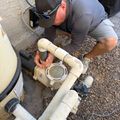
Clean the Filter Sooner Than You Think
This is where many Arizona pool owners lose time.
After a heavy-use weekend, the filter often needs attention sooner than scheduled. If the pool is busy, dusty, or already running warm, it may be holding a lot more than normal.
Signs the filter needs help:
- Pressure is higher than usual
- Return flow feels weak
- Water is staying cloudy after circulation
- The pump is working harder than normal
If you wait until the filter is packed, the recovery period takes longer and the pool can slip into a cloudy cycle.
Watch for the Quiet Warning Signs
Not every overused pool screams for help. Some just slowly go downhill.
Look for:
- Slippery steps or walls
- Water that loses sparkle even when it is not obviously dirty
- A faint haze in the deep end
- Chlorine disappearing faster than expected
- Guests complaining that the water feels “off”
Those are the early signs that the pool is carrying too much load. Catch it there and it is usually easy to correct. Ignore it and you are setting up a bigger cleanup later.
Arizona Summer Makes Recovery Slower
In July and August, the pool is under more stress than people realize. Even if you do everything right, the recovery can take longer because the environment is working against you.
That is why Arizona pool care after heavy use often needs:
- More circulation
- More frequent testing
- More brushing
- More attention to filter pressure
It is not overkill. It is just what it takes to keep the pool stable in extreme heat.
DIY Is Fine Until the Same Problem Keeps Coming Back
You can absolutely handle the basics yourself:
- Skim the pool
- Empty baskets
- Brush surfaces
- Test the water
- Adjust small chemistry drift
- Keep the pump running long enough to recover
But if the pool keeps going dull after every busy weekend, or if the chlorine disappears every time the family comes over, there is probably a root cause. That could be weak circulation, an undersized sanitizer setup, a dirty filter, high CYA, or just a pool that is carrying more load than it is configured for.
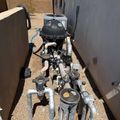
That is when it makes sense to stop guessing and have a pro look at the system.
A Simple Recovery Plan You Can Use
If you want the short version, use this after a busy pool day:
- Skim the pool and empty baskets.
- Brush the walls, steps, and corners.
- Run the pump longer than usual.
- Test chlorine and pH.
- Correct chemistry in small steps.
- Clean the filter if pressure is climbing or flow is weak.
- Recheck the water the next day.
That routine prevents most of the after-party pool problems we see in Arizona.
The Bottom Line
Heavy swim use does not have to turn into a pool emergency. Treat it like a recovery event, not just another day on the calendar. In Arizona, heat and sunlight make the water work harder, so quick cleanup and sensible chemistry matter more than they do in cooler places.
If your pool keeps going sideways after busy weekends, McCool's Pools can help you figure out whether the issue is chemistry, circulation, filtration, or equipment. A little attention right after the heavy use is usually a lot cheaper than a full cleanup later.







 (623) 323-9044
