 Click To Email
  (623) 323-9044
  Opening hours: Mon - Friday, 6:00am to 7:00pm






Circulation Is What Keeps a Pool From Going Sideways
Most pool problems do not start as dramatic disasters. They start as circulation problems.
Water that does not move well leaves dirt behind, lets chlorine get used up faster in certain areas, and gives algae a place to settle in. In Arizona, that gets worse because we ask pools to handle intense sun, constant dust, hard water, and long stretches of summer heat. A pool with weak circulation can look fine in the morning and turn hazy by the weekend.
If you want cleaner water and fewer surprise issues, circulation is one of the first systems worth understanding.
What Bad Circulation Actually Looks Like
You do not need fancy equipment to spot circulation trouble. The warning signs are usually obvious if you know where to look:
- Debris collects in the same corners every day
- Water looks clear in the shallow end but dull or cloudy in the deep end
- Algae comes back in the same spots after brushing
- Returns feel weak, uneven, or aimed in one direction only
- The waterline gets dusty or oily faster than normal
In Arizona, the giveaway is often the dust pattern. If dust settles evenly across the pool and then stays there, circulation is probably weak. If one side of the pool always looks cleaner than the other, the returns may not be pushing water where they need to.
Why Arizona Pools Need More Attention Here
Arizona pools deal with a few things that make circulation more important than it is in milder climates.
Heat Burns Through Sanitation Faster
When water temperatures climb, chlorine gets used up more quickly. That means every dead spot becomes a bigger risk. Water that sits still in a warm corner does not stay protected for long.
Dust Loads the Water Constantly
Fine dust is part of life here. Even when a storm is not blowing through, the air drops enough debris into the pool that your circulation system has to keep up with it. If it cannot, the filter gets overwhelmed and the pool turns dull faster.
Hard Water Makes the Problem More Expensive
Poor circulation gives hard water more chances to leave scale on tile, ladders, heaters, and salt cells. Water that keeps moving is less likely to sit long enough for calcium to settle out in the same place over and over.
Monsoon Season Creates a Second Job
During monsoon season, a clean pool can get hit with dirt, leaves, pollen, roof grit, and runoff in one afternoon. If your circulation is already weak, cleanup takes longer and the pool chemistry takes a bigger hit.
The Three Things That Matter Most
If you only focus on three circulation habits, make them these:
- Keep the pump and filter clean
- Aim the returns so water keeps moving
- Brush and skim before debris settles
Start With the Pump Run Time
The right pump schedule is not a guess. It depends on pool size, pump type, bather load, shade, and season. But in Arizona, the old idea that a pool only needs a short daily run is usually too optimistic in summer.
You want enough run time to turn the water over, sweep surface debris into the skimmer, and keep chlorinated water moving through the full system. If the pump runs too little, dead spots grow. If it runs far too much, you waste electricity without solving the real problem.
For many Arizona pools, the answer is not simply "run longer." It is "run smarter."
That usually means:
- Longer daytime run time during heavy heat
- More run time after brushing, swimming, or a dust event
- Different schedules for summer and winter
If you have a variable-speed pump, use it to your advantage. Lower RPMs can keep water moving efficiently for routine circulation, then you can bump the speed up when the pool needs a stronger sweep or a quick cleanup.
Return Jets Should Move the Whole Pool, Not Just One Corner
Return jets are often ignored, but they have a big impact on circulation.
The goal is to create a gentle, consistent pattern that moves water across the whole surface and down through the deeper sections. You do not want the returns blasting water into the same spot every day.
Here is the rule of thumb:
- Aim returns so the surface slowly rotates in one direction
- Break up stagnant corners and steps
- Keep deep water from staying isolated
- Adjust returns after furniture changes, storms, or service work
If one part of the pool always traps dust or never seems to clear up, the return pattern may be the reason. A small adjustment to the eyeball fitting can make a bigger difference than people expect.
Skimming and Brushing Are Not Optional in Arizona
Skimming and brushing are the cheapest circulation upgrades you will ever get.
Skimming removes debris before it sinks. That matters because once leaves, pollen, and dust settle, they become much harder for the system to remove. Brushing breaks up film, pushes dirt toward the main flow, and stops algae from getting a foothold on surfaces.
If you brush only when the pool already looks bad, you are playing defense. If you brush regularly, you are helping the water stay in motion.
Focus on these spots:
- Steps and benches
- Behind ladders
- Along the waterline
- Inside corners
- Shaded areas
- The area around drains and return dead zones
Arizona pools that are brushed consistently often use less chlorine because contaminants never get enough time to build up in the first place.
Watch the Filter Pressure
If circulation feels weak, the filter may be part of the problem.
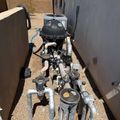
A dirty or scaled filter makes the pump work harder and reduces flow through the whole system. That means less water movement, less skimming, and worse cleanup after storms or heavy use.
Watch for:
- Pressure that climbs higher than normal
- Returns that feel weaker than usual
- Debris blowing back into the pool
- Cloudy water that never quite clears
If the filter is loading up fast, the issue may not be the filter alone. It could be a sign that the pool is pulling in too much debris, the pump schedule is too short, or the returns are not moving water effectively enough.
Simple Ways to Improve Circulation Without Replacing Equipment
You do not always need a new pump or expensive upgrade. A lot of circulation problems can be improved with small changes:
- Clean skimmer baskets often enough that flow does not drop
- Keep the water level high enough for the skimmer to work properly
- Brush after monsoon dust, heavy swim use, or service work
- Adjust returns seasonally
- Trim back plants that dump debris into the pool
Even the layout around the pool matters. A backyard with heavy landscaping on one side may need more manual attention because the wind keeps loading the same areas with debris.
When Circulation Trouble Is Really a Bigger Problem
Sometimes poor circulation is not caused by bad habits. It is caused by a real equipment issue.
Call a professional if you notice:
- Air in the pump basket
- Weak suction even after cleaning baskets
- A pump that is loud, hot, or vibrating
- Water that never clears despite brushing and balancing
- Dead spots that suddenly appeared after a repair or valve change
- A filter that stays restricted right after cleaning
Those symptoms can point to suction leaks, clogged plumbing, failing pump parts, a damaged filter, or a valve that is not set correctly.
The Bottom Line
In Arizona, a pool does not stay clean just because it has chlorine in it. It stays clean when water keeps moving, debris gets removed quickly, and every part of the system helps the rest of it work better.
If your pool has dead spots, dusty corners, or stubborn cleanup after wind and heat, circulation is probably part of the story. The good news is that circulation problems are usually easier to fix than people think. A better pump schedule, cleaner baskets, smarter return settings, and consistent brushing can make a pool easier to own all summer long.
Think of circulation as the pool's reset button. Keep it working and problems never get a chance to start.








 (623) 323-9044
