 Click To Email
  (623) 323-9044
  Opening hours: Mon - Friday, 6:00am to 7:00pm






Winter Does Not Mean Ignore the Pool
Arizona pools do not shut down for winter the way pools do in colder parts of the country. The water cools, swim days become less frequent, and chlorine demand usually drops, but the pool is still exposed to sun, dust, leaves, hard water, and equipment wear.
Because the water looks calmer in December and January, homeowners often reduce attention too much. Baskets sit full. The pump gets cut back too aggressively. The heater is ignored until the first spa night. Chemistry is tested less often. By spring, the pool may have scale at the tile line, cloudy water, algae in shaded areas, or equipment issues that could have been caught months earlier.
Winter pool care in Arizona should be lighter than summer care, but it should still be consistent. The goal is simple: keep the water balanced, keep circulation reliable, and prevent small problems from quietly building while the pool is not getting daily use.
Adjust Pump Runtime, But Do Not Guess
Cooler water slows algae growth and reduces sanitizer demand, so most Arizona pools do not need the same pump runtime in winter that they need in July. That can save real money, especially for homeowners who are still running long summer schedules.
As a general starting point, many residential Arizona pools can run around 4 to 6 hours per day in winter, depending on pool size, equipment, debris load, and whether the pool has a spa, water feature, in-floor cleaning system, or salt system. Variable-speed pumps may run longer at a lower speed because they move water efficiently without using much power.
Watch the pool after you adjust the schedule. If the water loses clarity, debris settles in the same corners every day, the skimmer stops pulling well, or chemistry becomes harder to hold, the pool may need more circulation. A windy week, heavy landscaping debris, or holiday swim use can justify a temporary bump in runtime.
Chlorine Demand Drops, But It Does Not Disappear
Arizona sunlight is still strong in winter. Even when the water is cool, UV exposure continues to break down chlorine. Organic debris also consumes sanitizer, especially when leaves, dirt, pollen, or seed pods sit in the pool for days.
Most pools need less chlorine in winter than in summer, but they still need regular testing. If chlorine sits too low for too long, algae can start in shaded steps, benches, corners, and behind ladders before the whole pool looks bad.
For many homeowners, winter is also when chemical habits get sloppy. Tablets stay in the floater too long. Acid gets skipped because pH does not feel urgent. Stabilizer, calcium hardness, and salt levels are ignored because the pool still looks clear.
At minimum, keep an eye on free chlorine, pH, total alkalinity, calcium hardness, cyanuric acid, and salt level if you have a salt system. Arizona hard water keeps adding minerals every time evaporation is replaced. Winter evaporation is slower than summer evaporation, but it does not stop. If pH and calcium are allowed to climb, scale can form on tile, spillways, heaters, salt cells, and interior surfaces.
Brush the Quiet Areas
In summer, heavy swim use helps move water around. In winter, the pool often sits still for longer stretches. That makes brushing more important, not less.
Focus on the areas where circulation is weakest: steps, benches, Baja shelves, corners, behind ladders, shaded walls, around the spa spillway, and near return fittings. These spots can collect dust and biofilm even when the main body of water looks good. Brushing breaks up that buildup so the filter and sanitizer can do their jobs.
This is especially important after wind. Arizona dust does not always float where you can skim it. A lot of it sinks and settles into small texture, grout lines, and corners. If it sits too long, it can contribute to staining, cloudy water, and higher chemical demand.
Keep Baskets and Filters Clean
Winter debris can be sneaky. Leaves, seed pods, palm debris, landscaping clippings, and windblown dirt can fill skimmer baskets quickly, especially after a storm or yard service.
Full baskets restrict water flow. Low flow can make the pump work harder, reduce skimming, weaken circulation, and cause heaters or salt systems to throw flow-related errors.
Check skimmer and pump baskets regularly, even when the pool is not being used. If your pool has trees nearby, you may need to check them more often during certain weeks.
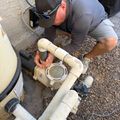
The filter matters too. If the filter carried a heavy load through summer and fall, winter is a smart time to clean or inspect it. Cartridge filters should be checked for torn pleats, broken bands, heavy oil residue, and calcium crust. DE and sand filters should be monitored for pressure changes and cleaning performance.
A clean filter makes winter maintenance easier because the system can remove dust before it turns into cloudy water.
Test the Heater Before the First Cold Spa Night
A lot of Arizona homeowners only think about the heater when guests are coming over or the first cool weekend arrives. That is also when heater problems are most frustrating.
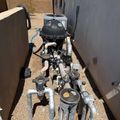
Do a heater check before you need it. Look for error codes, rust or corrosion, water around the heater, scale near plumbing connections, debris blocking vents, unusual smells, and weak flow warnings.
Heaters depend on good water balance and proper flow. High calcium, high pH, dirty filters, clogged baskets, or valve issues can all affect performance. If the heater has been sitting unused for months, a quick test run can reveal problems while there is still time to fix them.
If you smell gas, see scorch marks, notice leaking water, or the heater repeatedly fails ignition, stop and call a professional. Heater issues are not the place to experiment.
Watch Water Level
Even in cooler months, Arizona pools lose water. Evaporation slows down, but dry air, sun, wind, and heated spa use can still lower the level.
The water should usually sit around the middle of the skimmer opening. Too low, and the pump can draw air. Too high, and the skimmer may not pull surface debris effectively.
If you have an autofill, winter is a good time to make sure it is not hiding a problem. A stuck autofill can waste water and mask a leak. A failing autofill can let the pool drop low enough to damage equipment. If you are adding water constantly in winter, do not assume it is normal evaporation. Do a simple bucket test or have the pool checked for a leak.
Be Careful With Winter Salt Systems
Salt systems can behave differently as water temperature drops. Many chlorine generators reduce output or stop generating when the water gets too cold. That does not mean the pool no longer needs chlorine. It means you may need to supplement manually when the system cannot keep up.
Also remember that salt readings can fluctuate with temperature. Before adding a large amount of salt, confirm the reading with a reliable test. Over-salting is easy to do and expensive to fix. Winter is also a good time to inspect the salt cell for calcium scale and clean it according to manufacturer instructions.
Do Not Let the Pool Become a Spring Project
The best winter pool care plan is not complicated. It is steady.
Here is a practical rhythm for Arizona homeowners:
- Test chlorine and pH weekly
- Empty baskets before flow drops
- Brush steps, benches, corners, and shaded areas
- Keep the water level around mid-skimmer
- Clean or inspect the filter as needed
- Review pump runtime after weather changes
- Test the heater before you need it
- Watch for calcium at the tile line and spillways
That routine prevents the most common winter-to-spring problems: cloudy water, scale, algae in dead spots, weak heater performance, and equipment strain.
The Bottom Line
Winter is one of the easiest times to keep an Arizona pool healthy, but it is also one of the easiest times to neglect it. You can usually reduce pump runtime, use less sanitizer, and spend less time fighting the water than you do in summer. But the pool still needs circulation, brushing, filtration, water-level checks, and balanced chemistry.
Think of winter as maintenance mode. Keep the system clean, keep the water balanced, and check the equipment while the pool is under less stress. When spring heat arrives, the pool will already be clear, stable, and ready.

 (623) 323-9044
