 Click To Email
  (623) 323-9044
  Opening hours: Mon - Friday, 6:00am to 7:00pm






A Pump That Keeps Losing Prime Is Telling You Something
If your pool pump starts strong, then suddenly fills with air, gets noisy, or stops moving water well, the problem is usually not random. The pump is losing prime, which means it can no longer keep a solid column of water moving through the system.
That may sound like a small mechanical issue, but in Arizona it can snowball fast. Heat, evaporation, dust, hard water, and long run times all make the problem more likely and more annoying. A pump that loses prime does not just reduce circulation. It can leave debris sitting in the pool, weaken sanitizing, strain the motor, and waste electricity while the system struggles to recover.
The good news is that many prime-loss problems have a short list of causes. If you know what to check, you can often narrow it down quickly.
What "Losing Prime" Actually Means
Your pump is designed to pull water from the pool, move it through the filter and equipment pad, then send it back to the pool in a steady loop. When the system is sealed and working correctly, the pump basket stays mostly full of water and the flow stays consistent.
When prime is lost, air gets into the suction side or water cannot stay in the pump housing. The basket may start looking half-empty, bubbles may show up in the return lines, or the pump may sound like it is chewing gravel. Sometimes it happens slowly over a few hours. Sometimes it happens the minute the system shuts off and tries to restart.
Arizona Makes Prime Problems Worse
Arizona pools deal with conditions that make a marginal system fail faster.
Heat dries out seals and O-rings
Rubber parts do not last forever. In extreme heat, lid O-rings, drain plugs, and valve seals dry out, flatten, or crack sooner than they would in milder weather. A seal that looked fine in spring can start pulling in air by mid-summer.
Evaporation lowers the water level
When the water line drops too far below the skimmer opening, the system can start sucking air instead of water. That is one of the easiest ways to lose prime, and Arizona evaporation makes it a regular problem.
Dust and debris overload the baskets
Our dust is fine enough to clog a basket quickly. A full skimmer basket or pump basket restricts flow and makes it harder for the pump to stay fully fed.
Monsoon debris can shift the problem overnight
A storm can dump leaves, dirt, roof grit, and plant material into the pool all at once. That extra load can clog the basket, block the impeller, or make a weak suction side issue obvious.
The Most Common Reasons a Pump Loses Prime
1. Water level is too low
This is the first thing to check. If the water sits below the midpoint of the skimmer opening, the skimmer can start drawing air. On a windy or hot Arizona day, that can happen faster than people expect.
Fix:
- Raise the water level to the middle of the skimmer opening
- Check for excessive splash-out
- Look for autofill issues if the level keeps dropping
2. Skimmer or pump basket is clogged
Even a basket that is "mostly full" can restrict flow enough to cause trouble. If the pump has to work harder to pull water, it is more likely to lose prime after restart.
Fix:
- Empty the skimmer basket
- Clean the pump basket
- Recheck after heavy wind, service work, or a pool party
3. There is a suction-side air leak
This is one of the most common real problems. Air leaks usually happen before the pump, not after it. Typical leak points include:
- Pump lid O-ring
- Drain plugs
- Unions
- Valve stems
- Threaded fittings
- Suction-side plumbing cracks
If you see bubbles in the pump basket or return jets, that is a strong clue.
Fix:
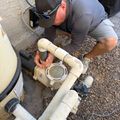
- Clean and lube the lid O-ring with pool-safe lubricant
- Tighten the lid evenly, not aggressively
- Check drain plugs and unions for looseness
- Inspect visible plumbing for drips or cracks
4. The impeller is clogged
Small debris can get past the basket and lodge in the impeller. When that happens, the pump may still sound like it is running, but actual water movement drops off sharply.
Fix:
- Shut the pump off
- Remove power before touching anything
- Open the pump housing only if you are comfortable doing basic maintenance
- Clear debris from the impeller if accessible
If the impeller keeps clogging, there is usually a bigger debris or filtration issue upstream.
5. The filter is too restricted
When the filter is dirty, scaled, or over-pressurized, the pump has a harder time maintaining flow. That does not always look like a classic leak problem. Sometimes it just looks like a pump that gets weak, noisy, or inconsistent.
Fix:
- Check filter pressure
- Clean cartridges or backwash as appropriate
- Watch for calcium buildup if you have hard water
6. The pump lid or housing is worn out
If the lid is warped, the O-ring groove is damaged, or the housing has a crack, the system may never seal well enough to hold prime. This is more common on older equipment that has spent years in direct sun.
Fix:
- Inspect the lid for distortion
- Replace brittle or flattened O-rings
- Look for hairline cracks around the basket or housing
A Simple DIY Diagnosis Order
If your pump keeps losing prime, check things in this order:
- Confirm the pool water level
- Empty the skimmer basket
- Empty the pump basket
- Inspect and lube the pump lid O-ring
- Tighten unions and check drain plugs
- Look for bubbles in the pump basket
- Check filter pressure and cleanliness
- Listen for cavitation, which sounds like rattling gravel or a dry, harsh whine
- Watch whether the problem happens only after the pump shuts off
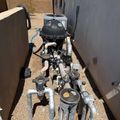
- Look for obvious plumbing leaks or cracked fittings at the pad
That sequence catches a lot of the common causes without overcomplicating it.
What Not to Do
There are a few mistakes that make prime problems worse:
- Do not keep restarting the pump over and over if it is running dry
- Do not ignore low water level and blame the pump first
- Do not force brittle lids or overtighten cracked fittings
- Do not assume bubbles mean "normal" if they are getting worse
Running a pump dry can damage the seal and overheat the motor. If the pump keeps losing prime every time it cycles, stop treating it like a nuisance and start treating it like a real equipment issue.
When You Should Call a Professional
Call in a tech if:
- The pump loses prime immediately after restart
- You cannot get rid of repeated bubbles
- The pump sounds loud, hot, or rough
- You suspect a suction-side plumbing leak
- The filter is clean but the system still will not stay primed
- The problem began after a valve adjustment or repair
Those symptoms usually mean the issue is deeper than a dirty basket or low water level. A proper diagnosis can save a lot of trial and error.
The Bottom Line
A pump that keeps losing prime is usually dealing with one of a handful of problems: low water, a clog, an air leak, a restricted filter, or worn-out equipment. In Arizona, heat and evaporation make all of those issues show up faster, which is why a small problem in June can become a major headache by August.
If you stay ahead of basket cleaning, keep an eye on your water level, and inspect seals before they fail, you can prevent most prime-loss problems before they start. And if the pump keeps acting up after the basic checks, it is time to let a professional trace the leak or restriction instead of burning through more time and electricity.
The best pump is the one you do not have to think about every day. Stable prime is a big part of that.







 (623) 323-9044
